

You’ve got the cashier page open, a QR code is staring back at you, and the obvious question lands: where do I actually get bitcoin from? I’ve been there, and it’s far less mysterious than it looks. In this guide I’ll show you how to add bitcoin to your wallet in the UK, whether you buy on an exchange and withdraw, buy straight into a wallet app or receive coins from someone you know. One honest point first: buying from a UK-registered crypto firm means ID checks, so “no verification” describes some casinos, not the way you get your coins.
The Quick Answer: Five Steps to Your First Bitcoin

Your first purchase can take anything from an hour to a couple of days, and most of that goes on account checks rather than the transfer itself. After that, the whole routine takes minutes.
- Choose a wallet and write down its recovery phrase.
- Open an account with a firm on the FCA’s crypto register and pass its ID checks.
- Buy bitcoin with pounds, keeping your bank’s crypto limits in mind.
- Copy a fresh receiving address and withdraw on the Bitcoin network.
- Send a small test first, then move the rest.
What a Bitcoin Wallet Actually Holds
A wallet doesn’t hold coins the way your purse holds a tenner. Your bitcoin sits on the blockchain, a shared public record, and the wallet holds the keys that move it. So when you add bitcoin to your wallet, coins are assigned to an address only your keys unlock. Your address is public and safe to share, while your recovery phrase of 12 or 24 words is the master key: whoever has it owns your coins.
Custodial vs Non-Custodial Wallets
The first choice is who holds the keys. With a custodial wallet, in practice your exchange account, the company holds them and you just have a login, so a forgotten password is a support ticket rather than a disaster. The catch is that the firm can freeze your balance or demand documents before releasing anything. With a non-custodial wallet the keys live on your own device, so nobody can block your coins, but nobody can rescue them either.
Hot Wallets vs Cold Wallets
The second choice is how connected your keys are. A hot wallet is an app on an online phone or computer, quick and free, and fine for money you’re about to spend. A cold wallet is usually a small hardware device that keeps keys offline and asks you to approve each transaction on its own screen. It’s slower, but far harder for malware to touch, so it suits savings.
| Wallet type | Who holds the keys | Best for | Main risk |
|---|---|---|---|
| Exchange account (custodial) | The exchange | Buying and selling | Freezes, firm failure, hacks |
| Mobile app (hot) | You | Small, everyday amounts | Lost or compromised phone |
| Desktop app (hot) | You | Regular use, more control | Malware on the computer |
| Hardware wallet (cold) | You, offline | Long-term holdings | Losing device and phrase together |
Set Up Your Wallet Before Any Money Moves
It’s tempting to buy first and sort the wallet out later. Please don’t. Ten minutes of setup while the wallet is still empty is what separates a smooth first transfer from a horror story on a forum.
Write Down Your Recovery Phrase — and Test It
When you create a non-custodial wallet, it shows you 12 or 24 words. Write them on paper, or stamp them into metal for serious sums, and keep them somewhere private. 🔐 Never photograph them, type them into a notes app or cloud drive, or share them with anyone, because no genuine exchange, wallet or casino will ever ask for them. Use your wallet’s backup check, or do a test restore, before you send a single penny.
Lock Down the App and Your Exchange Login
Next, protect the doors into your money. Set a PIN or biometric lock on the wallet app. On your exchange, use two-factor authentication through an authenticator app or security key rather than text messages, since SIM-swap fraud is real. If an address whitelist is offered, switch it on.
Three Ways to Get Bitcoin Into Your Wallet in the UK
There are three legitimate routes, and they suit different people. Two run through regulated firms, which means ID checks like those explained in our guide to identity checks in online gambling. The third depends on someone you genuinely trust.
Buy on an FCA-Registered Exchange, Then Withdraw
This is the classic way to add bitcoin to your wallet for the first time. Before signing up, look the firm up on the FCA’s crypto register and check the FCA Warning List for clones. Expect identity verification, a short test of your crypto knowledge and a cooling-off period, usually 24 hours, before your first purchase.
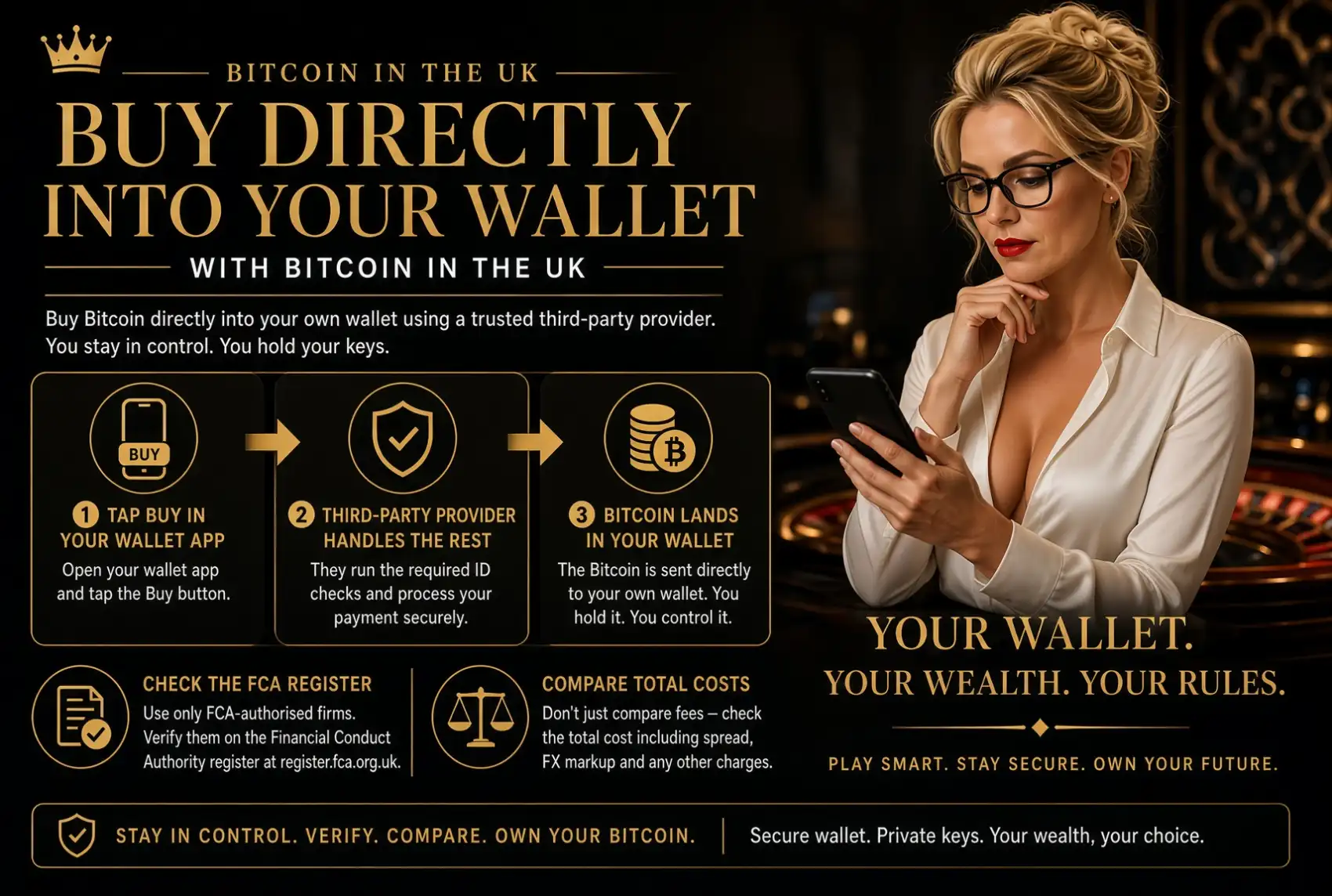
Receive Bitcoin From Someone You Know
The simplest route is a friend or relative sending you some. Tap Receive, share the address or QR code, and you’re done. Strangers online offering to “manage” or “double” your crypto are a textbook scam. For the giver, a gift counts as a disposal for tax unless it goes to a spouse, civil partner or charity.
| Route | ID check? | Costs to watch | UK watch-out |
|---|---|---|---|
| Exchange, then withdrawal | Yes | Trading fee, spread, withdrawal fee | Cooling-off on first purchase |
| Buy inside a wallet app | Yes, by the provider | Card fee and provider spread | Check the provider’s registration |
| From friends or family | No | Network fee paid by sender | Gift may be a disposal for the giver |
| Crypto ATM | — | — | Avoid: none are legal in the UK |
⚠️ That last row isn’t a joke. The FCA says none of its registered firms have been approved to run crypto ATMs, so “any of them operating in the UK are doing so illegally and consumers should not be using them.”
Step by Step: Moving Bitcoin From an Exchange to Your Wallet
This is the part that makes beginners nervous, so let’s slow down. Here’s exactly how to add bitcoin to your wallet from an exchange without drama. Screens differ, but the logic doesn’t.
- Make sure the bitcoin is in your normal balance, not locked in an “earn” product.
- Open your wallet, choose your Bitcoin account and tap Receive.
- Copy the new address, or confirm it on your hardware wallet’s screen.
- On the exchange, go to Withdraw, pick BTC and paste the address.
- Select the Bitcoin network and answer any questions about the destination.
- Send a small test and approve it with your two-factor code.
- Wait for it to confirm, then send the rest.
Getting the Right Receiving Address
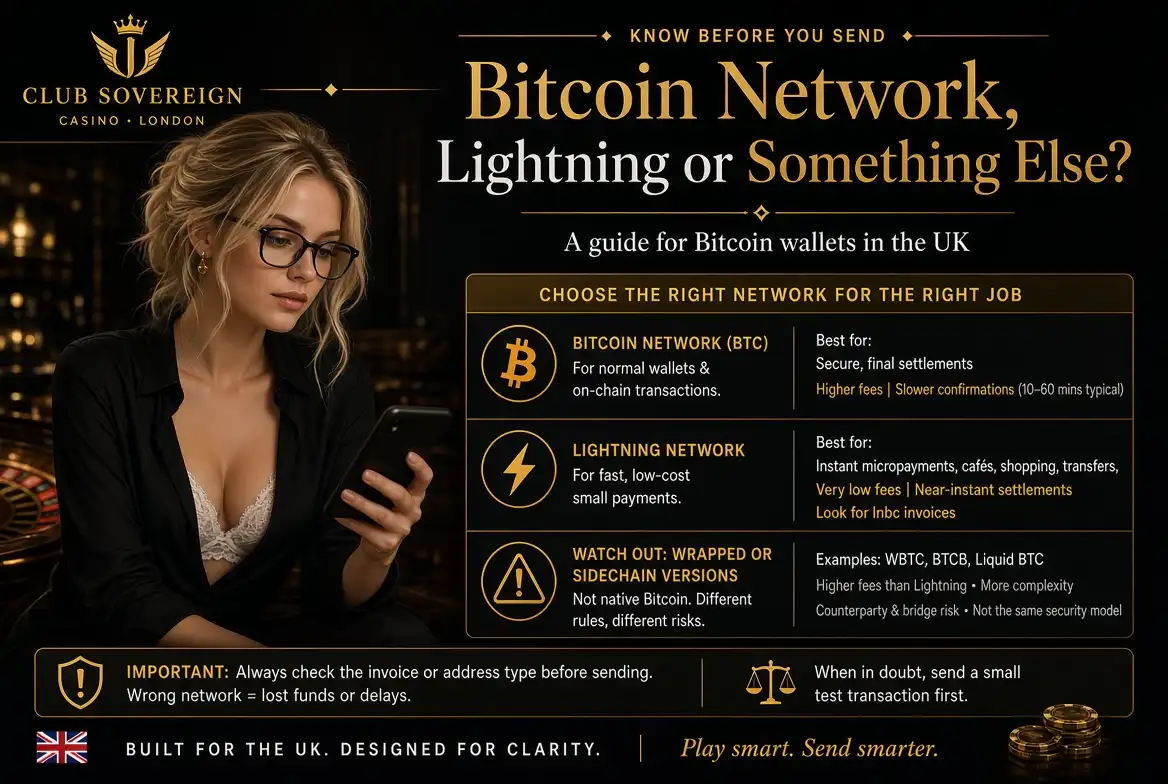
Always take a fresh address from your wallet’s Receive screen; modern ones usually start with “bc1”, older formats with “1” or “3”. Never copy an address from your transaction history, because scammers send dust from lookalike addresses hoping you’ll paste theirs, a trick called address poisoning. Clipboard malware can swap an address as you paste, so check the whole string, not just the ends.
Test Payment, Confirmations and Fees
A test costs one extra fee and can save the whole amount. Bitcoin adds a block roughly every ten minutes on average, so your wallet shows the payment as pending, then confirmed. ✅ The exchange sets its own withdrawal fee, while the network fee rises with demand, so tiny transfers on a busy day can feel painfully expensive.
UK Rules That Shape How You Buy and Move Bitcoin
Bitcoin doesn’t care where you live, but the firms you buy from certainly do. These rules explain the questions, the blocked payments and what you might owe HMRC. Here’s the picture as of November 2026.
FCA Registration, Risk Warnings and the Cooling-Off Period
Crypto firms serving UK customers must be registered with the FCA under the Money Laundering Regulations. Since 8 October 2023, crypto marketing has followed FCA rules that added a cooling-off period for first-time investors and banned “refer a friend” bonuses. They also require clear risk warnings like this one.
“Don’t invest unless you’re prepared to lose all the money you invest. This is a high-risk investment and you should not expect to be protected if something goes wrong. Take 2 mins to learn more.” — FCA example risk warning, June 2023
Crypto derivatives have been off limits to retail customers since 6 January 2021. The FCA published final crypto rules in June 2026 and opened applications for full authorisation on 30 September 2026, with the new regime due on 25 October 2027. Its director of authorisation, Dominic Cashman, said: “The UK’s new crypto regime will give consumers greater protections and firms a clear framework to operate in.” Until then, crypto is highly unlikely to be covered by the Financial Services Compensation Scheme.
The Travel Rule: Why Your Exchange Asks Where Coins Are Going
Since 1 September 2023, UK crypto firms have had to collect, verify and share information about transfers under the Travel Rule. When you withdraw, your exchange may ask whether the address is yours and whether it’s another exchange or a wallet you control. Answer honestly, as these are routine questions that never involve your recovery phrase.
Bank Limits on Payments to Crypto Exchanges
To fight scams, many banks cap payments to exchanges they can identify, and some block credit cards entirely. These limits come from the banks’ own pages (checked November 2026), so confirm your bank’s current rules before buying.
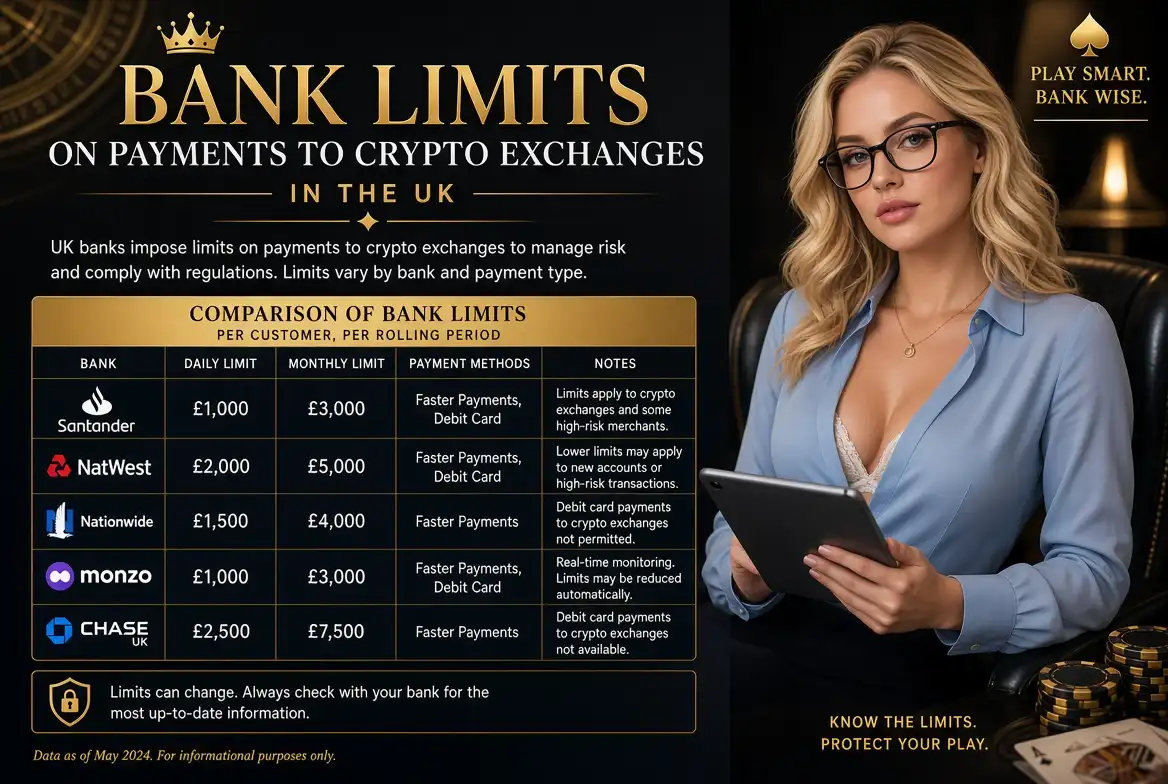
Don’t dodge a limit by routing money through another bank; it’s exactly what scammers coach victims to do.
Tax: What HMRC Counts as a Disposal
Buying and holding bitcoin isn’t taxed. HMRC says Capital Gains Tax may apply when you sell, swap, spend or give it away (gifts to a spouse, civil partner or charity aside). For 2026/27 the tax-free allowance is £3,000, with gains above it taxed at 18% or 24% depending on your income, and transaction fees count as allowable costs.
“You must keep your own records of your transactions.” — HMRC
According to HMRC guidance, since 1 January 2026 UK crypto platforms collect details such as your name, address and tax residence and report transactions to HMRC under the Cryptoasset Reporting Framework. Cases like fees paid in bitcoin or coins used at a casino can be tricky, so speak to a qualified tax adviser if the sums matter.
Common Mistakes That Cost Beginners Money
Almost every crypto horror story comes down to the same handful of slip-ups. None need technical skill to avoid, just patience. Run through this list before every transfer.
- Picking the wrong network because it looked cheaper.
- Pasting an address from your history instead of a fresh one.
- Sharing a recovery phrase with “support staff” who messaged first.
- Skipping the test payment on a large transfer.
- Using unregistered apps, social media “brokers” or crypto ATMs.
- Keeping no records until the tax return is due.
Using Your Wallet for Crypto Casino Deposits
Let’s be straight about where this leads for many readers. Crypto deposits generally aren’t available at casinos licensed by the UK Gambling Commission today. The Commission’s industry forum noted in March 2026 that its rules contain no ban “theoretically”, yet crypto deposits “would be difficult at this stage”, and no change is expected before October 2027. Sites taking bitcoin from UK players are therefore typically licensed offshore, with fewer protections.
If that’s your plan, read our guide on how to deposit at no ID casinos using crypto and weigh up whether no verification casinos are safe. Many still ask for documents before a withdrawal, so see what to do if your account is locked for verification.
Safer gambling first. You must be 18 or over to gamble. Only stake money you can afford to lose, and remember bitcoin’s price can shrink your balance before you place a bet. If you’ve joined GamStop, respect that decision and never look for ways around it. Worried about gambling? Call the National Gambling Helpline, run by GamCare, free on 0808 8020 133, 24/7, or visit gamcare.org.uk.
Final Thoughts
Once you’ve done it once, it stops feeling daunting. Set up the wallet first, buy from an FCA-registered firm, choose the right network and always send a test. Keep the recovery phrase offline and your records tidy, and every time you add bitcoin to your wallet it’ll be routine. For the bigger picture, read our no KYC gambling guide.
FAQ
These are the questions I get asked most. The answers are short, and the sections above have the detail.
Can I buy bitcoin straight into my own wallet in the UK?
Yes. Many wallet apps offer a built-in purchase through a third-party provider, or you can buy on an exchange and withdraw, and either way the firm taking your money checks your ID.
How long does it take for bitcoin to arrive?
On the Bitcoin network, usually one or a few blocks, so roughly ten minutes or more, and longer when it’s busy. Lightning payments typically arrive in seconds.
Can I buy bitcoin with a credit card in the UK?
Often not. NatWest and Nationwide, for example, block credit card purchases of crypto, so a debit card or bank transfer is the usual route.
Is moving bitcoin between my own wallets taxable?
Moving coins between wallets you own isn’t on HMRC’s list of disposals. Fees paid in bitcoin can be more complicated, so keep records and ask an adviser if unsure.
Can I get bitcoin without ID in the UK?
Not from a UK-registered firm, because anti-money laundering rules require checks. Crypto ATMs are illegal here, so the only check-free route is coins from someone you know.
What if I send bitcoin to the wrong address or network?
Bitcoin payments can’t be reversed, so the wrong address usually means lost funds. For a wrong network, contact the receiving platform quickly, as recovery is sometimes possible. That’s why you add bitcoin to your wallet with a test payment first.