

You chose USDT because it doesn’t lurch around like bitcoin. Sensible. Then the withdrawal screen asks you to pick between TRC-20, ERC-20, BEP-20, Solana, TON and half a dozen others, and suddenly the “simple” coin doesn’t feel so simple. That dropdown is where most lost USDT goes missing, so this guide shows you how to add USDT to your wallet in the UK without becoming a cautionary tale. If you need the wallet basics first, such as recovery phrases and two-factor logins, start with our guide to adding bitcoin.
The Quick Answer: USDT in Five Steps
Here’s the whole job on one screen. Every step matters, but step two is the one that saves your money.
- Set up a wallet that supports the USDT network you plan to use.
- Check which network the receiving side accepts, often TRC-20 or ERC-20.
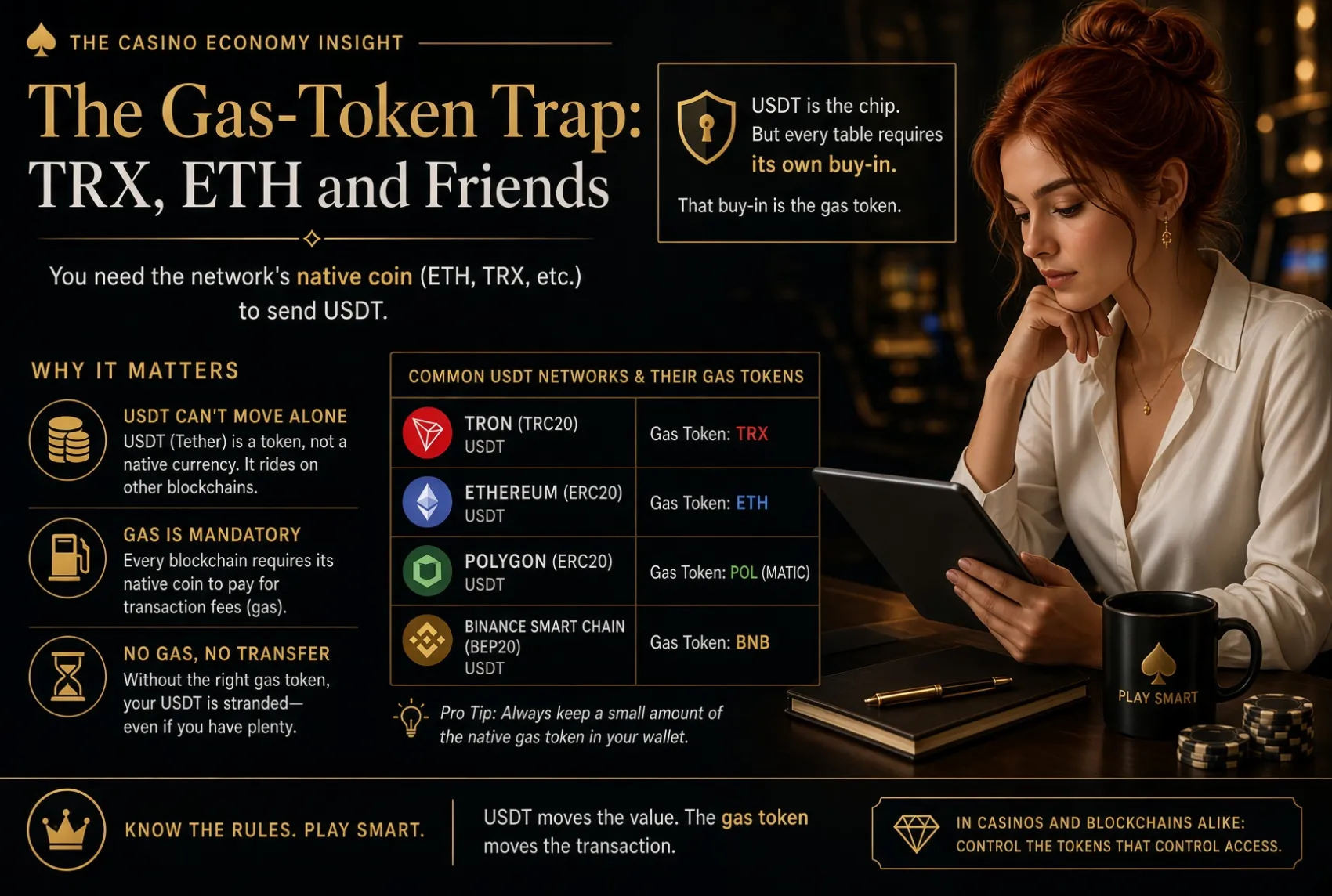
- Keep a little of that network’s own coin in the wallet for future sending fees.
- Buy USDT with pounds from a firm on the FCA’s crypto register.
- Withdraw on exactly the same network, with a small test first.
What USDT Is (and What “Stable” Really Means)
USDT, also written USD₮, is a stablecoin issued by Tether and designed to track the US dollar one-for-one. HMRC lists stablecoins as one of the main types of cryptoasset, and it’s clear about where they stand: “HMRC does not consider cryptoassets to be currency or money.” So however dollar-like USDT feels, legally and for tax it behaves like any other crypto token.
How Tether Keeps the Dollar Peg
Tether says every token is backed by its reserves, which it describes as including traditional currency, cash equivalents and other assets, including loans it has made to third parties. The catch is that only verified Tether customers can redeem tokens directly with the company, and minimum amounts apply. Everyone else, which probably includes you, gets out by selling on an exchange at whatever the market pays. And because USDT tracks the dollar, its sterling value moves whenever GBP/USD does.
USDT vs USDC in One Minute
USDC is the other big dollar stablecoin, issued by a different company with its own reserves and disclosures. The two do the same basic job, but they don’t always run on the same networks, and a casino or platform that takes one won’t necessarily take the other. Everything in this guide about matching networks applies to USDC too.

Networks Tether Supports in 2026
Tether’s own supported-protocols page lists the live networks, and I’ve pulled out the ones you’re most likely to meet. When an exchange or casino offers you a choice, it’ll usually be from this list.
| Network | Label you’ll see | Address looks like | Fees paid in |
|---|---|---|---|
| Tron | TRC-20 | Starts with “T” | TRX, or Energy and Bandwidth |
| Ethereum | ERC-20 | Starts with “0x” | ETH |
| BNB Smart Chain | BEP-20 or BSC | Starts with “0x” | BNB |
| Avalanche | AVAX C-Chain | Starts with “0x” | AVAX |
| Solana | SPL or Solana | Letters and numbers, no prefix | SOL |
| TON | Jetton or TON | TON address format | TON |
| Others | Kava, Celo, Kaia, Liquid, Polkadot AssetHub, Tezos, Near, Aptos | Varies | That chain’s coin |
⚠️ Notice that Ethereum, BNB Smart Chain and Avalanche addresses all start with “0x” and look identical. The address format won’t warn you that you’ve picked the wrong network, so the label is what you have to check.
Retired Networks You Should Avoid
Some older versions of USDT have been switched off. From 1 September 2025, Tether stopped redemptions and froze the remaining tokens on five legacy chains: Omni (on Bitcoin), Bitcoin Cash SLP, Kusama, EOS and Algorand. If an old wallet or an out-of-date platform still shows USDT on any of these, don’t send or accept it.
The Golden Rule: Match the Network at Both Ends
The sending network and the receiving network must be identical, every single time. Copy your address from the wallet screen for the same network you’ll choose on the withdrawal form, and if the two labels don’t match, stop. Sending on the wrong network can sometimes be fixed by the receiving platform, but with your own wallet it’s often unrecoverable.
Setting Up Your Wallet for USDT
Recovery phrases and custodial versus self-custody wallets are covered in our bitcoin guide. What’s different here is that you add USDT to your wallet per network, not as a single coin. That means two extra jobs before any money moves.
Adding the Right USDT Token
Most wallets let you switch USDT on through a “manage tokens” or “add asset” menu, and you’ll often see several USDTs listed, one per network. Pick the one that matches the network you’ll receive on, and use the wallet’s built-in listing rather than pasting in a contract yourself. Fake tokens called “USDT” are everywhere. If you ever have to add a custom token, take the contract address only from Tether’s official supported-protocols page.
What It Costs to Move USDT on Each Network
Fees differ enormously from one network to the next, and they change with demand. The table shows the general picture as of November 2026, not prices, which go stale within days. On top of the network fee, your exchange sets its own withdrawal fee, which often differs by network, so always read the confirmation screen.
| Network | Fee paid in | Typical cost level | Speed | Watch-out |
|---|---|---|---|---|
| Tron (TRC-20) | TRX or Energy | Low to moderate | Fast | Costs jump without Energy |
| Ethereum (ERC-20) | ETH | Can be high when busy | Minutes | Poor value for small sums |
| BNB Smart Chain | BNB | Low | Fast | “0x” address confusion |
| Solana | SOL | Very low | Seconds | Needs a little SOL |
| TON | TON | Low | Fast | Some platforms need a memo |
How to Buy USDT in the UK
If you’re wondering how to buy USDT in the UK, the good news is that there’s no UK ban on holding it. You may have read about USDT disappearing from exchanges, but those delistings were for customers in the European Economic Area under the EU’s MiCA rules; one major exchange’s support page, updated October 2026, lists only EEA countries, and the UK isn’t one of them. That said, whether a particular platform offers a GBP-to-USDT market varies, so check before you sign up.
Buying With Pounds on a Registered Platform
Start by checking the firm on the FCA’s crypto register. Expect the usual onboarding, including ID verification of the kind described in our guide to identity checks in online gambling, a quick quiz on crypto risks and, for first-time buyers, a waiting period (typically a day) before the purchase goes through. Your bank may also cap payments to crypto platforms, and our bitcoin guide lists the main banks’ limits.
Swapping From Another Crypto
If you already hold bitcoin or ether, swapping it for USDT can feel like moving money between pockets. HMRC doesn’t see it that way. Exchanging one cryptoasset for another counts as a disposal for Capital Gains Tax, so a swap can create a taxable gain even though no pounds changed hands.
Receiving USDT From Someone You Know
A friend or relative can simply send you USDT. Give them your address and, just as importantly, tell them the network, because “send me some USDT” isn’t enough information. Ignore anyone who contacts you out of the blue about USDT “investment plans” or guaranteed returns, as that’s one of the most common crypto scams around.
Step by Step: Withdrawing USDT to Your Own Wallet
This is where it all comes together. Follow the steps in order and you’ll add USDT to your wallet with no nasty surprises. The only skill involved is checking twice.
- See which networks your exchange offers for USDT withdrawals.
- In your wallet, switch on USDT for one of those networks.
- Tap Receive and copy the address from that network’s screen.
- On the exchange, choose Withdraw, select USDT and pick the matching network.
- Paste the address and compare every character, including the middle.
- Tell the exchange honestly if it asks whether the wallet is yours.
- Send a small test, find it on that network’s block explorer, then send the rest.
✅ One extra habit worth forming: never copy a USDT address from your transaction history. Scammers send tiny amounts from lookalike addresses, a trick called address poisoning, and it’s particularly common on Tron and Ethereum.
Risks That Are Unique to USDT
Stablecoins remove bitcoin’s wild price swings, but they bring risks of their own. Most come from the fact that a single company stands behind USDT. None of them should scare you off, but you should know about all three.
Tether Can Freeze Addresses
Unlike bitcoin, USDT has an issuer that can step in. Tether’s terms of service, updated in February 2026, spell out that power in plain words.
“freeze any Tether Tokens held by you … as required by applicable Law or where Tether, in its sole discretion, determines it is prudent to do so” — Tether Token Terms of Sale and Service
The same terms allow it to blacklist addresses, and independent trackers show it has frozen thousands of them over the years. In practice, freezes are aimed at addresses linked to crime and sanctions, but accepting USDT from unknown sources can drag you into trouble you didn’t cause.

No Safety Net if Things Go Wrong
If Tether, an exchange or your wallet fails, there’s no compensation scheme waiting to catch you. Tether’s own terms are blunt: “Tether Tokens are not legal tender and are not backed by any Government or protected through any insurance provided by Tether or any of its Affiliates.” The FCA makes the same point: don’t expect the FSCS to step in on crypto losses.
UK Rules and Tax: The USDT-Specific Bits
FCA registration, the Travel Rule and bank limits apply to USDT exactly as they do to bitcoin. Here I’ll stick to what’s specific to stablecoins.
Where UK Stablecoin Regulation Stands in November 2026
In June 2026 the FCA published final rules for UK-issued qualifying stablecoins, covering backing assets, redemption, safeguarding and disclosures. Firms could apply for authorisation from 30 September 2026, and the new crypto regime is due to start on 25 October 2027. Separately, the Bank of England set out its policy for systemic sterling stablecoins, dropping its proposed £20,000 per-person holding limit in favour of a temporary £40 billion issuance cap per coin, with final rules expected by the end of 2026. USDT isn’t a UK-issued regulated stablecoin, and how coins issued abroad will be treated once the regime starts is worth watching on the FCA’s updates.
How HMRC Treats USDT
Buying USDT with pounds isn’t taxed. Selling it for pounds, swapping it, spending it or giving it away is a disposal, and here’s the twist: because USDT tracks the dollar, you can make a gain or loss in sterling purely from exchange-rate moves, even if USDT never leaves $1. In the 2026/27 tax year you can make £3,000 of total gains tax-free; beyond that, rates are 18% or 24% depending on your income band. Records matter, and grey areas like gas paid in tokens or stablecoins spent at a casino are best run past an accountant or tax adviser when real money is involved.
Using USDT for Crypto Casino Deposits
For many readers, this is where USDT ends up. Don’t expect to find a USDT option at a UK Gambling Commission-licensed casino. Minutes from the Commission’s March 2026 industry forum record that crypto isn’t prohibited “theoretically”, yet using it as a deposit “would be difficult at this stage”, and nothing is expected to change before the FCA regime starts in late 2027. Casinos that do take USDT from UK players are generally offshore operators, so your protections are thinner.
The cashier’s network must match your withdrawal exactly, and we explain the cashier side in depositing at no ID casinos with crypto. Read up on the safety of no verification casinos first, and bookmark our help page for when an account is locked for verification at cash-out time.
Play safe. Gambling is for over-18s only. Treat anything you deposit as money you’re prepared to lose, and remember a stablecoin doesn’t make bets any less risky. If you’ve registered with GamStop, respect it and never try to get around it. If gambling is causing you worry, the National Gambling Helpline, run by GamCare, is free on 0808 8020 133, 24 hours a day, or visit gamcare.org.uk.
Final Thoughts
USDT is easy once you respect the network. Pick the network first, keep some gas in the wallet, test before the main transfer and note the sterling value for HMRC. Do that every time you add USDT to your wallet and the dropdown will never catch you out. For the wider picture, read our no KYC gambling guide.
FAQ
These are the USDT questions I get asked most often. Each answer is short, with the detail above.
Is USDT banned in the UK?
No UK ban applies to holding or buying USDT. The well-publicised delistings affected EEA customers under the EU’s MiCA rules, not the UK, although USDT isn’t a UK-regulated stablecoin.
Should I use TRC-20 or ERC-20 for USDT?
Use whichever network the receiving side supports. TRC-20 is often cheaper for simple transfers, while ERC-20 needs ETH for fees and can be pricey when Ethereum is busy.
Why can’t I send my USDT?
Almost always, you’re missing the network’s gas coin. Add a little TRX for Tron or ETH for Ethereum to the same wallet and try again.
What happens if I send USDT on the wrong network?
If it went to an exchange, contact their support quickly, as some can recover it for a fee. With your own wallet, recovery may be impossible, which is why you add USDT to your wallet with a small test first.
Do I pay tax on USDT if it stays at $1?
Possibly. HMRC measures gains in pounds, so a stronger dollar can turn a USDT sale into a taxable gain.
Can Tether freeze my USDT?
Yes. Its terms allow it to freeze tokens and blacklist addresses where the law requires or where it judges it prudent, although freezes are typically aimed at addresses linked to crime.